
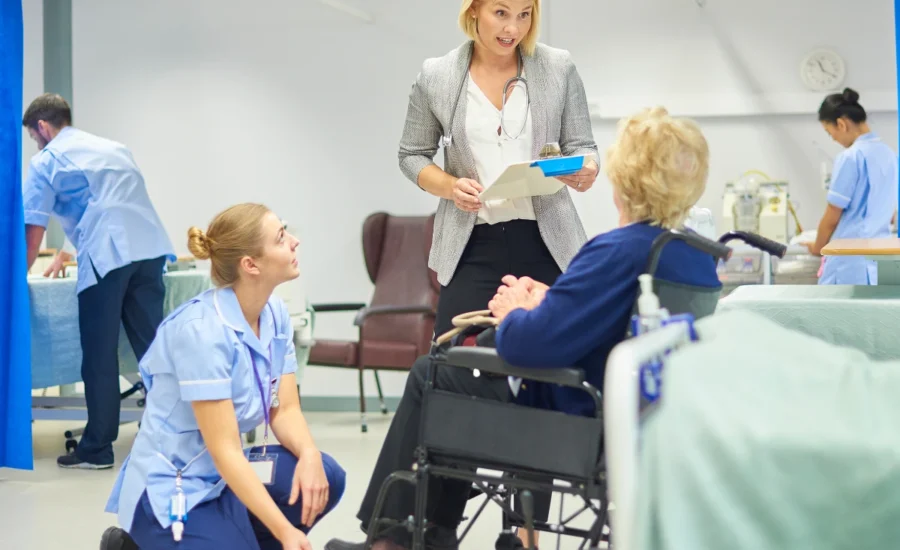
Post-operative rehabilitation is an extremely important part of recovery journey after surgery, especially for the older adults. The main focus is helping individuals regain movement, muscle strength, stability, and independence as well as reducing pain and the risk of possible complications. Early Physiotherapy input ensure a safe and effective return to functional activities whether you are recovering from joint replacements, fractures, spinal procedures, or general surgery. The rehabilitation includes mobility exercises, strength training and techniques to manage pain adapted to an individual’s specific needs and goals. Post-operative rehabilitation can significantly improve outcomes and quality of life of an individual.
Lorem Ipsum
P
What do we offer ?
We provide specialised Physiotherapy services on-site specifically tailored for residents in care homes with main focus on post-operative rehab and recovery. Our highly experienced Physiotherapists are skilled at developing personalised treatment plans that include strength and balance training, mobility improvement, pain management, falls prevention, and rehabilitation of functional abilities to support return to activities of daily living. We work in collaboration with the care home staff, families, and other healthcare providers to ensure a seamless recovery process. We bring high-quality physiotherapy input directly to your care home. Whether you are recovering from surgery or require ongoing rehab, our expert team members are their to help and support in promoting independence, comfort, and a better quality of life !
Pain Management and swelling reductio
We use therapeutic exercises, positioning and manual therapy techniques like soft tissue mobilisation to control pain, reduce swelling and promote faster healing.
Improving Mobility
For the elderly facing joint stiffness, muscle weakness and balance deficit, we help maintain mobility with decreased risk of falls and independence through several approaches, such as manual therapy, exercises and gait training.
Joint mobilisation and flexibility work
We use joint mobilisation techniques to reduce stiffness and improve range of motion which is crucial in early days post joint replacements to achieve positive outcome.
Walking aid assessment and progression
We offer individualised assessment of appropriate walking aids to be used by th resident post -surgery and create rehabilitaion plan that clearly maps out the progression towards reduced dependence on the walking aids with the goal of aciveing unaided mobility, if possible.
Muscle strengthening program
We provide specifically tailored exercise programs that target weak muscles around the surgical site, help maintain overall muscle mass, and improve circulation. These exercises are designed to support healing at the site of the operation and promote general strength and conditioning. This targeted approach is essential for achieving a successful recovery and positive long-term surgical outcomes.
Lorem Ipsum
Physiotherapy input in the post-operative phase is essential to the overall success of your surgery. At carehomephysio, our team of highly skilled physiotherapists is dedicated to support you throughout your recovery journey. We take every effort to ensure your rehabilitation is safe, effective, and personalised to your individual needs helping you regain mobility, strength, and confidence as soon as possible. Whether you’ve had abdominal, neurological, post traumatic following fractures or elective joint replacement surgery- we have the expertise to help you in your road to recovery.
Reducing pain and swelling: Poor pain control and swelling increase the recovery times following surgery. Physiotherapy has a significant role in reducing pain and swelling by using manual techniques, modalities such as TENS, soft tissue mobilisation and massage, ice and heat therapy as well as advice about positioning and elevation. Our team members have the experience and skills to provide appropriate input specific to an individual’s needs.
Improving strength and flexibility: Stiffness around the operated area is a common post-operative complication that can have detrimental effect on the recovery. Our rehabilitation program begins by focusing on reducing stiffness through a combination of passive, active-assisted, and eventually active exercises aimed at improving range of motion and flexibility. As your mobility improves, we gradually introduce strengthening exercises, including the use of therabands if needed, to help rebuild muscle strength and provide support to the affected area—ensuring a smoother, more complete recovery.
Mobility training: After a complicated surgery, mobility can become difficult, and without proper support, individuals are at risk of becoming bed-bound. This slows the recovery process and leads to a range of post-operative complications, including respiratory issues, and muscle deconditioning. Early intervention plays a vital role in promoting a faster, safer recovery. Our mobility training begins with assessing your ability to move in bed, followed by gradual progression to sitting at the edge of the bed, standing, and transferring safely to the chair. As recovery advances, we focus on improving walking patterns and ensuring correct gait mechanics. We also train the individuals in the use of appropriate mobility aids—including transfer devices, rollator frames, and walking sticks—tailored to individual needs.The aim is to help you regain mobility as soon as possible.
Scar management: This is a crucial part of post -operative rehabilitation which helps in reducing the tightness and promoting healing of the tissues. At carehomephysio, our team of highly experienced Physiotherapists use scar mobilisation techniques such as massage, myofascial release and stretching with the aim of preventing adhesion formation. The treatment is tailored to the individual condition and severity and ensuring that scar has healed before beginning of the therapy.
Lorem Ipsum
Lorem Ipsum is simply dummy text of the printing and typesetting industry. Lorem Ipsum has been the industry’s standard dummy text ever since the 1500s, when an unknown printer took a galley of type and scrambled it to make a type specimen book. It has survived not only five centuries, but also the leap into electronic typesetting, remaining essentially unchanged. It was popularised in the 1960s with the release of Letraset sheets containing Lorem Ipsum passages, and more recently with desktop publishing software like Aldus PageMaker including versions of Lorem Ipsum.
Frequently Asked Questions
Lorem Ipsum has been the industry’s standard dummy text ever since the 1500s, when an unknown printer took a galley of type and scrambled it to make a type specimen book.
Lorem Ipsum has been the industry’s standard dummy text ever since the 1500s, when an unknown printer took a galley of type and scrambled it to make a type specimen book.
Lorem Ipsum has been the industry’s standard dummy text ever since the 1500s, when an unknown printer took a galley of type and scrambled it to make a type specimen book.
Lorem Ipsum has been the industry’s standard dummy text ever since the 1500s, when an unknown printer took a galley of type and scrambled it to make a type specimen book.
Lorem Ipsum has been the industry’s standard dummy text ever since the 1500s, when an unknown printer took a galley of type and scrambled it to make a type specimen book.