- Mon - Sat : 8 A.M to 7 P.M / Sunday : 10 A.M to 4 P.M
- Nationwide


Returning to a care home following hospital discharge, or living with increasing frailty and reduced mobility, can significantly impact strength, balance, confidence, and overall mobility, increasing the risk of deconditioning and hospital readmission without timely physiotherapy input. We deliver targeted post-hospital discharge physiotherapy and frailty rehabilitation within care homes to support recovery, restore mobility, and improve quality of life.
Returning to a care home following hospital discharge, or living with increasing frailty and reduced mobility, can significantly impact strength, balance, confidence, and overall mobility, increasing the risk of deconditioning and hospital readmission without timely physiotherapy input. We deliver targeted post-hospital discharge physiotherapy and frailty rehabilitation within care homes to support recovery, restore mobility, and improve quality of life.

Hospital discharge can be a vulnerable time for older adults, particularly following illness, infection, or prolonged bed rest. Many residents return to their care home with reduced strength, mobility, and confidence, and without timely post-hospital discharge physiotherapy, this decline can progress quickly into frailty and deconditioning.
Frailty is a recognised clinical syndrome in which an individual has reduced physiological reserves, making it harder to recover from even minor illnesses. Our physiotherapists provide a structured frailty rehabilitation programme within care homes, supporting individuals to rebuild muscle strength and stamina, restore mobility, and reduce the risk of hospital readmission.
Without timely physiotherapy input, residents recovering from hospital discharge or experiencing increasing frailty are at significant risk of further decline. Reduced activity leads to worsening muscle strength, mobility, and stamina, which increases the likelihood of falls, hospital readmissions, and loss of confidence. Timely post-hospital discharge physiotherapy and frailty rehabilitation helps break this cycle by supporting residents to regain strength and confidence before further deterioration occurs, while also reducing pressure on care home staff and the wider healthcare system.
Frailty and deconditioning can develop gradually, and recognising the early signs allows physiotherapy input to begin before a resident’s condition declines further.
A noticeable slowing in walking pace, reduced walking distance, or increased reliance on furniture or staff support.
Difficulty standing from a chair and toilet, transferring in bed, or completing tasks that were previously manageable.
Becoming tired quickly during everyday activities or needing more rest periods compared to earlier.
A noticeable slowing in walking pace, reduced walking distance, or increased reliance on furniture or staff support.
Difficulty standing from a chair and toilet, transferring in bed, or completing tasks that were previously manageable.
Becoming tired quickly during everyday activities or needing more rest periods compared to earlier.
Increased unsteadiness during standing, transfers, turning, or walking.
A noticeable reduction in time spent out of bed or a chair, with increased preference to lie down, often following illness or hospital admission.
Increased unsteadiness during standing, transfers, turning, or walking.
Increased reliance on care home staff and reluctance to move independently, following a fall, illness, or hospital stay.
Rehabilitation focuses on maintaining mobility, managing muscle tone, and reducing the risk of secondary complications such as contractures, while promoting comfort and overall wellbeing.
A pattern of repeated hospital stays, which is a strong indicator of underlying frailty that has not been fully addressed.
A pattern of repeated hospital stays, which is a strong indicator of underlying frailty that has not been fully addressed.
Managing several health conditions simultaneously can increase the risk of frailty and make recovery from illness more challenging.
We also provide physiotherapy and rehabilitation for a range of other less common neurological conditions. Please get in touch to discuss your specific requirements.
Managing several health conditions simultaneously can increase the risk of frailty and make recovery from illness more challenging.
Our physiotherapists provide a structured, individualised approach to support recovery following hospital discharge or in cases of frailty and deconditioning.
A detailed assessment of strength, mobility, balance, stamina, and functional ability, taking into account recent hospital admissions, medical history, and current care needs.
Progressive, graded exercise programmes to rebuild muscle strength and endurance, helping restore physical reserve lost during illness or hospital admission.
Identifying deficits in the normal gait pattern and working to improve walking pattern, pace, and distance, with or without mobility aids.
A targeted exercise programme to improve balance and reduce the risk of falls, particularly important following periods of reduced mobility or illness.
Therapeutic re-training of everyday movements such as bed and chair transfers and sit-to-stand activities to support safer and more efficient movement during recovery.
Assessing and recommending appropriate mobility and transfer aids to support safe recovery and movement during rehabilitation.
Supporting graded progression to rebuild confidence in movement and reduce fear of falling or further decline.
Working closely with the care team to share recommendations and ensure consistency of physiotherapy input between sessions.
We review recent hospital discharge summaries, medical history, and current care plans to establish a baseline of current function and ability.
Our expert physiotherapists assess strength, mobility, balance, stamina, and flexibility to identify limitations and restrictions.
A tailored programme is developed with realistic, progressive goals based on individual abilities and recovery needs.
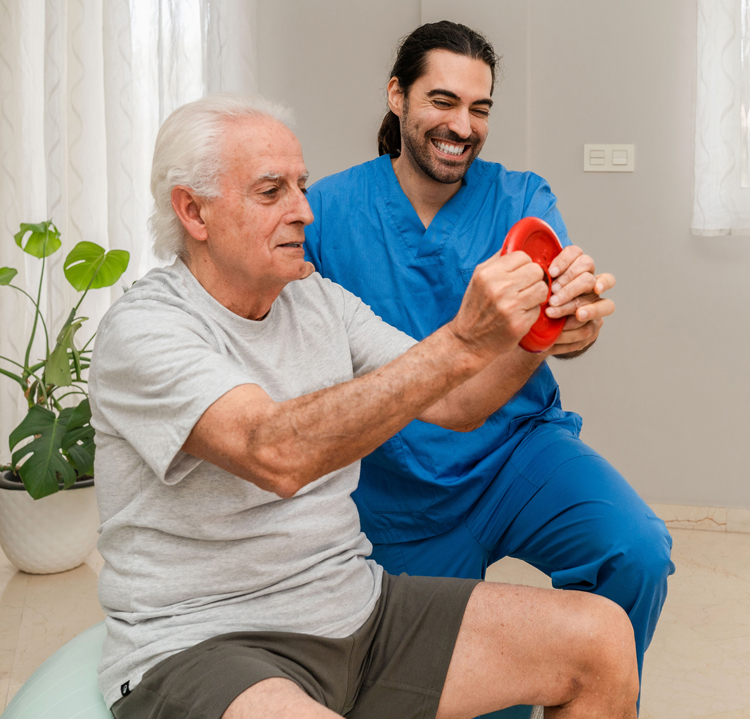
Our physiotherapists deliver hands-on treatment, manual therapy, and exercise sessions, progressing intensity and complexity as strength and confidence improve.
We provide advice to care staff on supporting safe mobility and transfers as part of everyday care.
We reassess regularly, adjusting the rehabilitation plan and maintaining communication with families and the care team.
Once rehabilitation goals are achieved, we continue with a maintenance programme to sustain mobility, strength, and overall physical function, helping to prevent further decline.
We aim to begin rehabilitation within 24–48 hours of referral to reduce the risk of further decline.
Frailty is a recognised clinical state involving reduced physiological reserve, making an individual more vulnerable to illness or sudden decline. While some changes are part of normal ageing, frailty can often be improved with timely physiotherapy input.
Yes. Our physiotherapists adapt their approach for individuals with dementia or cognitive impairment, working closely with the care team to support engagement.
Visit frequency depends on individual needs and stage of recovery and is agreed following the initial evaluation and reviewed regularly.
Yes. This service is available for both respite and permanent individuals, including short-term rehabilitation following hospital discharge.
Yes, we offer discounts for block bookings. Please contact us for details.
Fill in our enquiry form
A single conversation with our team could be the first step towards a stronger, safer recovery for your resident.