- Mon - Sat : 8 A.M to 7 P.M / Sunday : 10 A.M to 4 P.M
- Nationwide


Physiotherapy plays a vital role in supporting elderly residents, whether they are recovering from illness, surgery, general decline, or aiming to stay as active and independent as possible. Rehabilitation focuses on regaining lost function and independence after a setback, while ongoing maintenance helps residents preserve movement and build confidence, slowing further decline and maintaining a good quality of life.
Physiotherapy plays a vital role in supporting elderly residents, whether they are recovering from illness, surgery, general decline, or aiming to stay as active and independent as possible. Rehabilitation focuses on regaining lost function and independence after a setback, while ongoing maintenance helps residents preserve movement and build confidence, slowing further decline and maintaining a good quality of life.
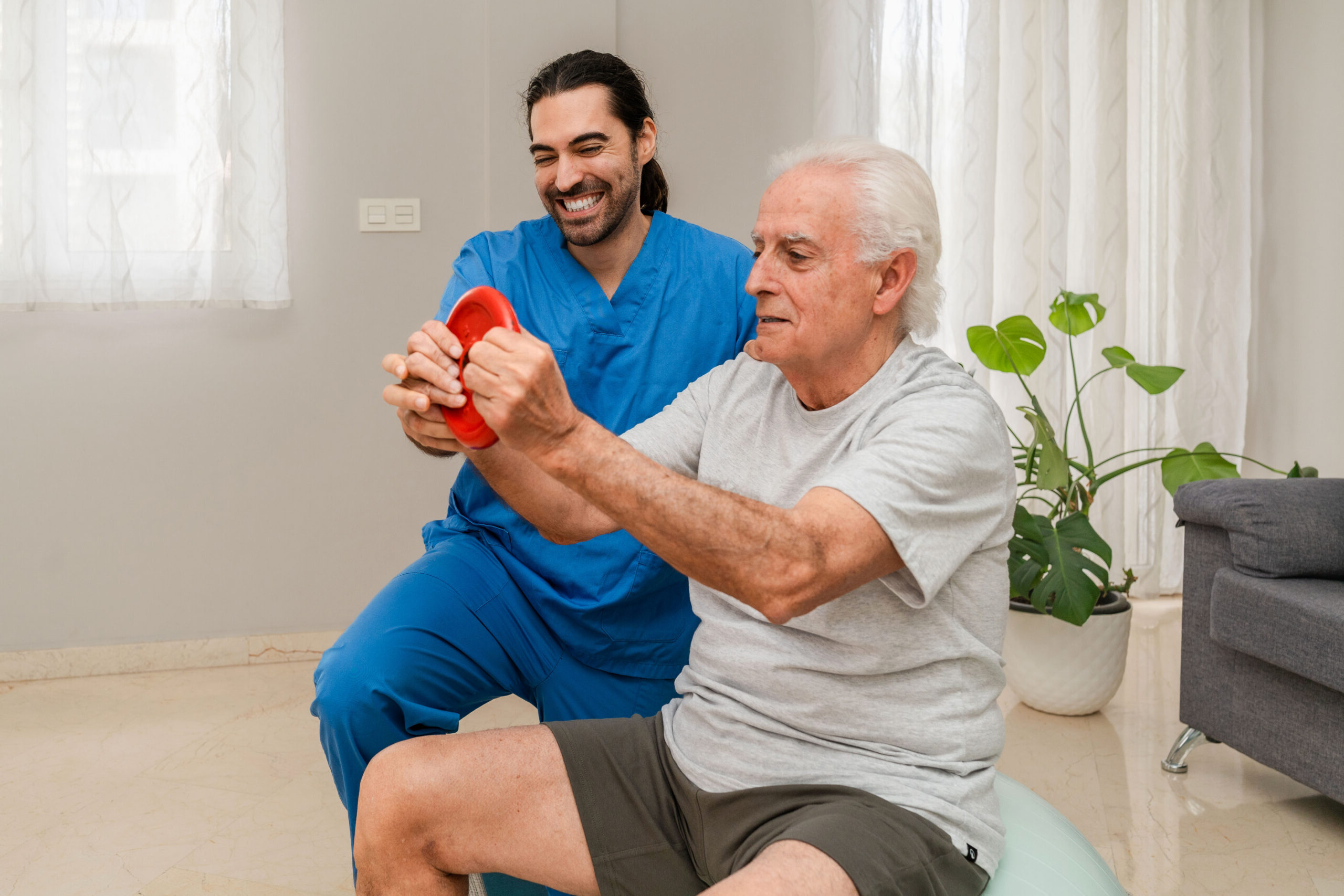
Natural changes in strength, balance, and mobility often occur as we age. While these changes are a normal part of ageing, they should not lead to loss of independence. If left unaddressed, they can result in a gradual reduction in mobility, increased dependence, and reduced functional abilities.
Physiotherapy plays a significant role in helping older adults living in care homes maintain the skills needed for everyday activities such as standing, walking, transferring, and participating in self-care. Through tailored, targeted exercises and hands-on treatment, physiotherapists help elderly residents stay as active as possible, reducing the risk of falls, and improving overall wellbeing.
Beyond the physical benefits, remaining active has a significant impact on mental wellbeing, confidence, cognitive function, and social engagement. Older adults who maintain mobility are more likely to take part in activities, spend time with others, and maintain a positive attitude towards ageing. Regular physiotherapy input also helps reduce the likelihood of hospital admissions caused by falls, infections related to inactivity, or a sudden decline in function, and supports a quicker return to previous abilities following a period of illness or decline.
Without targeted exercise, residents can become increasingly sedentary, spending more time sitting and becoming reluctant to participate in activities. Over time, this leads to deconditioning and a further decline in physical ability, which can ultimately result in residents becoming bed-bound and a significantly reduced quality of life.
Physiotherapy can make a meaningful difference across a wide range of age-related and long term conditions in older adults living in care homes.
Changes in walking pace, gait pattern and stamina can have a negative impact on movement and increase reliance on carers or mobility aids.
Age-related loss of muscle mass and strength can affect posture, stability and energy levels which affects independence and increases reliance on aids.
Reduced balance and coordination can increase the risk of falls and reduce confidence in standing, walking and transfers.
Changes in walking pace, gait pattern and stamina can have a negative impact on movement and increase reliance on carers or mobility aids.
Age-related loss of muscle mass and strength can affect posture, stability and energy levels which affects independence and increases reliance on aids.
Reduced balance and coordination can increase the risk of falls and reduce confidence in standing, walking and transfers.
Persistent pain in the joints or muscles can limit movement and reduce activity levels, contributing to further physical deterioration.
Persistent pain in the joints or muscles can limit movement and reduce activity levels, contributing to further physical deterioration.
Long periods in bed, often following illness or hospital admission, can lead to significant loss of strength and function if not addressed promptly.
Reduced joint range of movement, often due to arthritis or inactivity, can make everyday tasks more difficult and increase discomfort.
Long periods in bed, often following illness or hospital admission, can lead to significant loss of strength and function if not addressed promptly.
Reduced joint range of movement, often due to arthritis or inactivity, can make everyday tasks more difficult and increase discomfort.
Fear of falling can lead to decreased activity, creating a cycle of further weakness and reduced independence.
Conditions such as stroke, Parkinson's disease and arthritis often benefit from ongoing physiotherapy assessment and management to help maintain mobility, function and quality of life.
Fractures, particularly of the hip, wrist or pelvis, can have a significant impact on mobility, strength and independence. Osteoporosis weakens bones and increases the risk of fractures. Physiotherapists help older adults improve strength, balance and mobility through safe, tailored exercise programmes.
Fear of falling can lead to decreased activity, creating a cycle of further weakness and reduced independence.
Conditions such as stroke, Parkinson's disease and arthritis often benefit from ongoing physiotherapy assessment and management to help maintain mobility, function and quality of life.
Fractures, particularly of the hip, wrist or pelvis, can have a significant impact on mobility, strength and independence. Osteoporosis weakens bones and increases the risk of fractures. Physiotherapists help older adults improve strength, balance and mobility through safe, tailored exercise programmes.
Delivering physiotherapy directly within the care home means the rehabilitation plan is built around each older adult’s routine, working alongside the team who knows them best, supporting care home physiotherapy in a practical and person-centred way.
An older adult is assessed following referral from a family member or the care home manager. This consists of a detailed evaluation to understand current abilities, rehabilitation goals and factors limiting movement or causing pain, forming the basis of care home physiotherapy input.
Based on the assessment, a structured rehabilitation plan is developed with specific and realistic goals according to the wishes of the older adult. The physiotherapist also makes recommendations to the individual and family regarding the frequency of care home physiotherapy sessions required to achieve these rehabilitation goals.
It is recommended that care home physiotherapy is delivered as part of an ongoing rehabilitation programme rather than a one-off appointment, allowing progress to be reviewed and built upon over time.
We work closely with care home staff, sharing recommendations and supporting them to encourage safe movement and rehabilitation activity as part of everyday care.
We are able to provide structured group rehabilitation sessions for care homes, led by our physiotherapists and supported by rehabilitation assistants. These sessions encourage social engagement, motivation and consistent rehabilitation activity, making exercise a regular and enjoyable part of daily life in the home.
For older residents who have achieved their rehabilitation goals, regular maintenance physiotherapy sessions are crucial in preserving progress, preventing further decline and maintaining quality of life over the long term.
Our physiotherapists use a range of evidence-based treatments to support elderly residents in regaining and maintaining their physical abilities.
We assess and address difficulties with walking pattern, pace and safety. After identifying mobility problems, exercises are provided to target weak muscles or stiff joints, alongside practical walking practice with appropriate aids, gradually increasing distance as part of progression. We help older adults move confidently and efficiently, reducing risk of falls and promoting independence.
We use evidence-based balance therapy to improve stability in elderly residents living in care homes. Programmes are tailored to individual ability, progressing gradually to challenge and improve the balance reactions essential for safe movement.
Low stamina is common in older adults, particularly following illness or a period of inactivity. We incorporate graded activity structured to build endurance and gradually increase tolerance for everyday tasks such as walking, transfers and self-care.
As part of our care home physiotherapy service, we assess the suitability of current mobility aids and equipment, recommend appropriate alternatives where needed, and ensure elderly residents are using them safely and effectively to improve independence and reduce risk.
Our physiotherapists design and prescribe exercise programmes for elderly residents in care homes, based on their abilities and needs, targeting strength, flexibility and function. These programmes are tailored to personal goals and can be supported by care staff between sessions, if needed.
Many older adults in care homes experience ongoing pain, particularly related to arthritis, joint stiffness and muscle injuries. Our physiotherapists use a combination of manual therapy, movement-based treatment, exercise prescription and functional rehabilitation to help manage pain and stiffness, improve mobility and support independence in older adults.
Effective care home physiotherapy goes beyond individual sessions. We communicate regularly with care home staff, sharing exercise programmes, recommendations and progress updates to ensure rehabilitation is supported consistently throughout the day.
For elderly residents with long-term neurological conditions such as stroke or Parkinson's disease, our physiotherapists provide specialist assessment and rehabilitation. For more information, please visit our dedicated Neurological Physiotherapy page.
No. Physiotherapy is just as valuable for care home residents experiencing a gradual decline in mobility or strength, or those wishing to maintain their current level of independence.
Regular maintenance physiotherapy sessions help elderly residents in care homes who have achieved their rehabilitation goals to preserve progress, prevent further decline and maintain quality of life over the long term. Maintenance physiotherapy is an important part of supporting older adults to remain active and independent in a care home setting.
Yes. All our physiotherapists are registered with the Health and Care Professions Council (HCPC) and the Chartered Society of Physiotherapy (CSP), and have extensive experience working with older adults in care homes.
Yes. Our physiotherapists are trained to work with individuals living with dementia or cognitive impairment and engage them effectively using tailored, person-centred rehabilitation approaches.
Visit frequency depends on the individual's needs and rehabilitation goals. This is agreed with the individual and family following the initial assessment for care home physiotherapy and reviewed regularly as the resident progresses.
Yes. Rehabilitation assistant sessions are available based on the physiotherapist's assessment and recommendations, helping to increase the frequency of care home physiotherapy between visits. A dedicated physiotherapist carries out regular reviews to ensure sessions remain appropriate, safe and effective as the individual progresses.
Yes, we offer discounts on block bookings of five or ten physiotherapy sessions. Please check with us for details.
Fill in our enquiry form

Speak to our team about how physiotherapy can support the residents in your care.